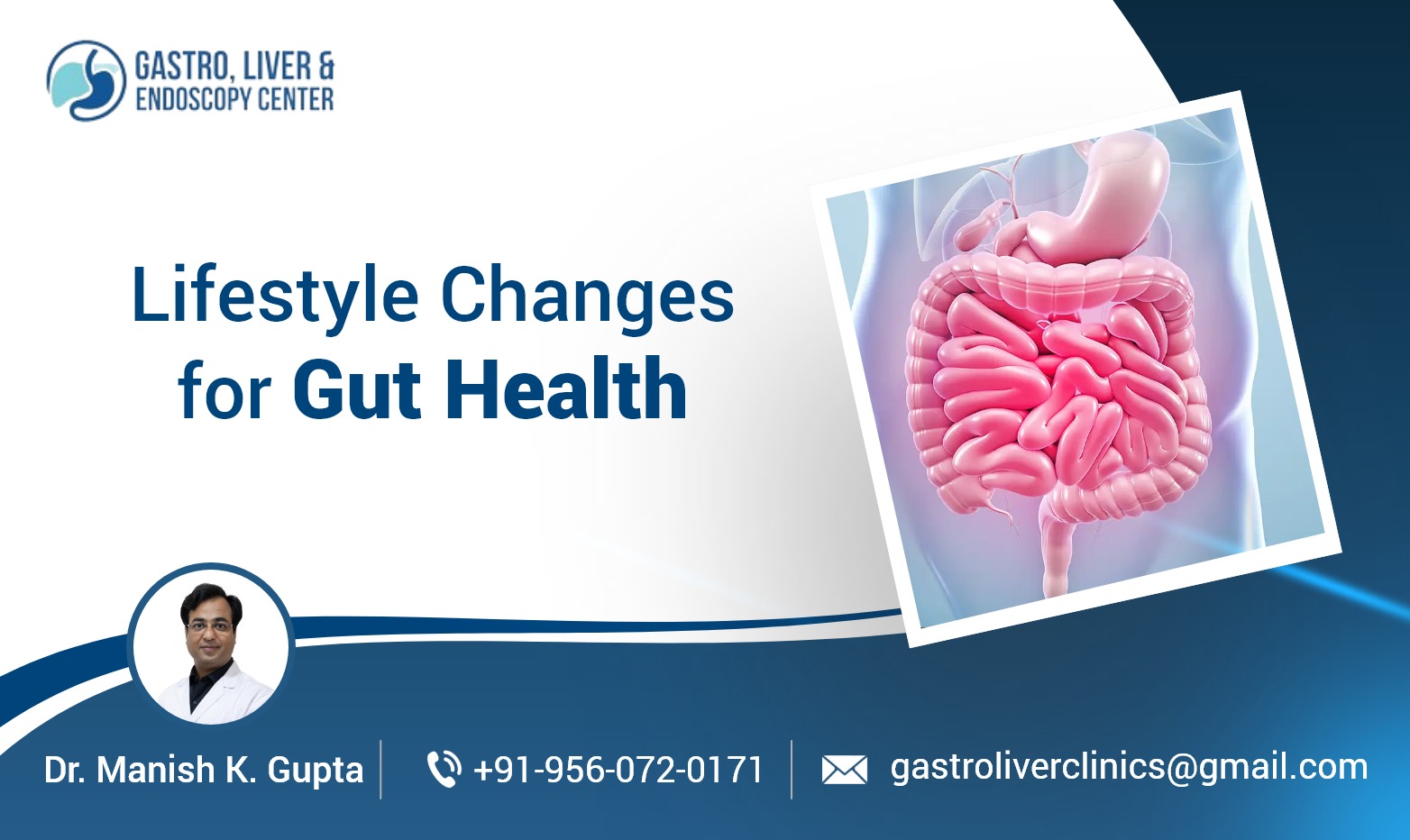
Improving gut health is essential for maintaining overall wellness, as the digestive system plays a major role in immunity, metabolism, and nutrient absorption. By making simple lifestyle adjustments, you can support a balanced gut microbiome and prevent many digestive issues. Here are some expert recommendations by the Best Gastroenterologist in Ghaziabad & Noida for maintaining gut health in 2024.
1. Dietary Adjustments
A balanced and nutritious diet is the foundation of good gut health.
For Enquiry

Increase Fiber Intake
Consume more fruits, vegetables, whole grains, nuts, and seeds to promote a healthy gut microbiome. Fiber helps feed beneficial bacteria and improves digestion.
Probiotic-Rich Foods
Include foods such as yogurt, kefir, sauerkraut, kimchi, and other fermented foods that contain beneficial bacteria to support gut flora.
Prebiotic Foods
Foods like garlic, onions, bananas, oats, and asparagus help nourish the good bacteria already present in your gut.
Reduce Processed Foods
Highly processed foods, refined sugars, and artificial additives can harm gut bacteria and increase inflammation in the digestive tract.
2. Stay Hydrated
Drinking enough water helps the digestive system function smoothly. Proper hydration supports nutrient absorption, prevents constipation, and maintains the mucosal lining of the intestines.
3. Manage Stress
Chronic stress can disturb the gut-brain connection and lead to digestive problems such as bloating, acidity, or irritable bowel syndrome (IBS).
Practice stress-relief activities like:
- Meditation
- Yoga
- Deep breathing exercises
- Spending time outdoors
4. Get Adequate Sleep
Sleep plays an important role in regulating gut bacteria and digestive hormones. Aim for 7–9 hours of quality sleep every night to keep your gut and overall health balanced.
5. Exercise Regularly
Physical activity improves digestion and supports a diverse gut microbiome. Activities like walking, cycling, swimming, or yoga can help maintain healthy bowel movements and reduce inflammation.
6. Limit Antibiotics and NSAIDs
While antibiotics are sometimes necessary, overuse can destroy beneficial gut bacteria. Always take them only when prescribed by a doctor.
Similarly, frequent use of non-steroidal anti-inflammatory drugs (NSAIDs) may irritate the gut lining and should be used carefully.
7. Avoid Smoking and Limit Alcohol
Smoking and excessive alcohol intake can damage the intestinal lining and disrupt the balance of gut bacteria. Reducing or eliminating these habits can significantly improve digestive health.
8. Maintain a Healthy Weight
Being overweight or obese can increase the risk of digestive problems such as fatty liver disease, acid reflux, and inflammation in the gut. Maintaining a healthy weight through proper diet and exercise helps keep the digestive system functioning well.
9. Eat Mindfully
Mindful eating can greatly improve digestion.
- Eat slowly and chew food properly
- Avoid overeating
- Stick to regular meal timings
- Reduce late-night heavy meals
These habits help the digestive system process food more efficiently.
10. Regular Medical Check-ups
If you frequently experience symptoms such as bloating, acidity, constipation, or abdominal pain, consult a gastroenterologist. Early diagnosis can help prevent serious digestive disorders and ensure proper treatment.
11. Stay Updated on Gut Health
Scientific research on gut health continues to evolve. Staying informed about healthy eating habits, probiotics, and digestive wellness can help you make better lifestyle choices.
Conclusion
Maintaining good gut health requires a combination of healthy eating, stress management, regular exercise, proper sleep, and medical guidance. By adopting these lifestyle changes in 2024, you can improve digestion, boost immunity, and enhance overall well-being.