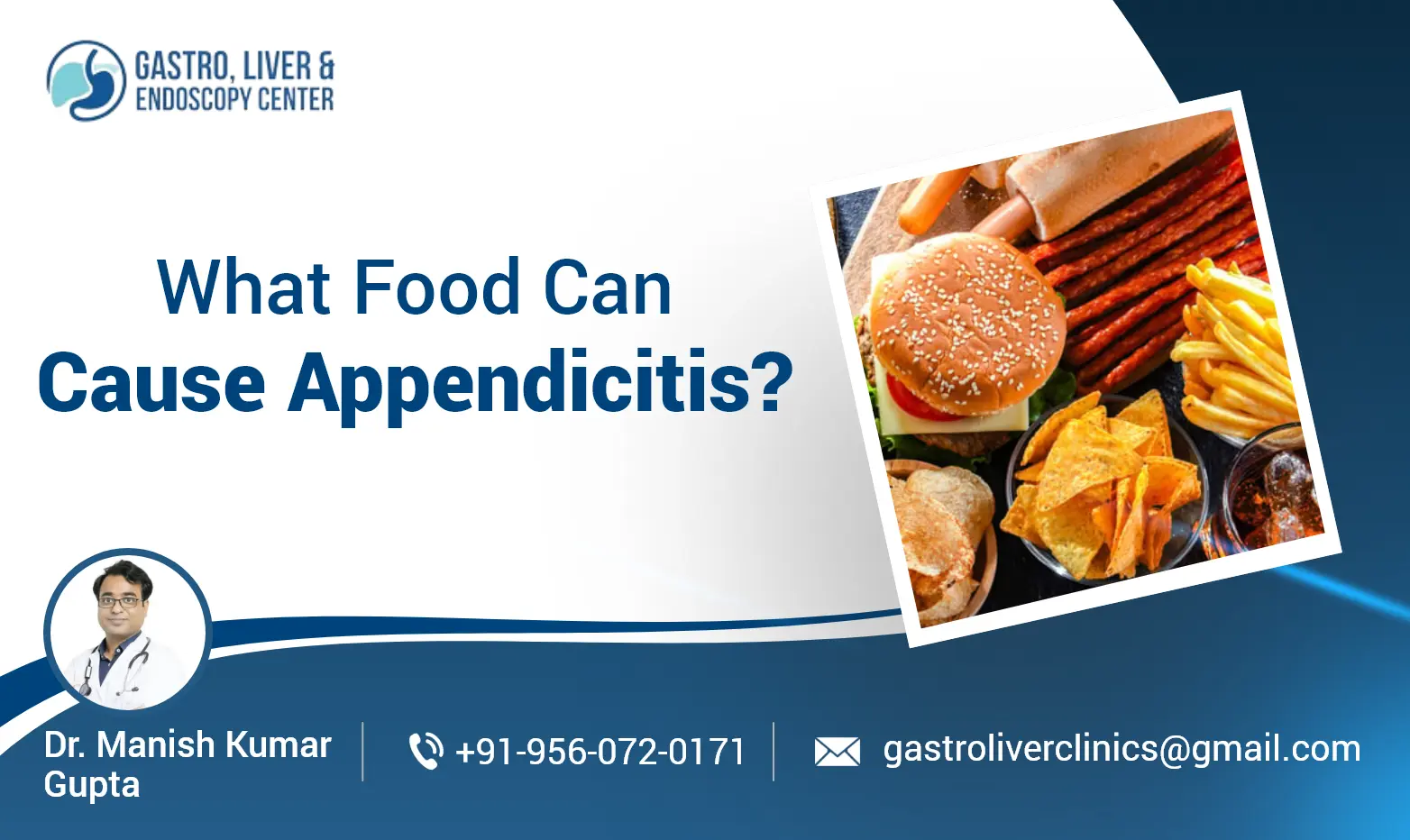
Appendicitis is a painful and sometimes dangerous condition that occurs when the appendix becomes inflamed and infected. While no single food directly causes appendicitis, research and clinical observations suggest that dietary patterns can influence the risk. In particular, diets low in fiber and high in processed, greasy, or fatty foods may increase the likelihood of constipation and the formation of hardened stool—known as fecaliths—that can obstruct the appendix.
In this long-form guide, we’ll explore how food choices affect appendicitis risk, which foods to limit, what to eat more of, and practical dietary tips for prevention.
For Enquiry

What Is Appendicitis and How Does Diet Play a Role?
Appendicitis happens when the appendix becomes blocked, leading to inflammation, bacterial overgrowth, and infection. One common cause of blockage is fecaliths, which are small, hardened pieces of stool.
A diet lacking fiber slows digestion, making stools harder and more difficult to pass. Over time, this can increase pressure in the intestines and raise the chance that stool particles lodge in the appendix opening.
While genetics, infections, and gut health also matter, diet is one of the most controllable risk factors.
Can Low-Fiber Foods Increase the Risk of Appendicitis?
Yes, low-fiber diets are strongly associated with constipation, which is a major contributor to appendiceal blockage.
Low-Fiber Foods to Limit:
- Refined grains (white bread, white pasta, white rice)
- Pastries, cakes, and cookies
- Sugary breakfast cereals
- Highly processed snack foods
These foods digest quickly but provide little bulk to stool, slowing intestinal movement and increasing the likelihood of hardened stool forming.
Do Processed and Fried Foods Contribute to Appendicitis?
Processed and fried foods can indirectly raise appendicitis risk by disrupting digestion and slowing bowel movements.
Examples Include:
- Fast food (burgers, fries, fried chicken)
- Processed meats like sausages, bacon, and hot dogs
- Deep-fried snacks and frozen meals
These foods are often high in unhealthy fats and low in fiber, which can lead to digestive distress, constipation, and intestinal pressure.
Is High-Fat Dairy Bad for Appendix Health?
High-fat dairy products may contribute to constipation, especially in people who are lactose intolerant or sensitive to dairy.
Dairy Products to Limit:
- Cheese (especially hard and processed varieties)
- Ice cream
- Butter and full-fat cream
While dairy can be part of a balanced diet, excessive intake without enough fiber and fluids may slow digestion.
Can Seeds and Hard Food Bits Cause Appendix Blockage?
This topic is debated, but in some cases, hard-to-digest seeds or kernels may contribute to blockage.
Foods to Be Cautious With:
- Popcorn kernels
- Seeds from figs, oranges, and melons
- Large quantities of unchewed seeds
For most people, seeds are harmless and even healthy. The key is moderation and thorough chewing, especially for individuals with digestive issues.
Does Red Meat Increase the Risk of Appendicitis?
High consumption of red meat has been linked to slower digestion and constipation.
Why Red Meat Can Be an Issue:
- Low in fiber
- Takes longer to digest
- Can increase intestinal pressure when eaten in excess
Replacing some red meat meals with plant-based proteins or lean meats can support better gut health.
How Does Hydration Affect Appendicitis Risk?
Hydration plays a crucial role in preventing constipation.
When the body lacks water:
- Stool becomes hard and dry
- Bowel movements slow down
- Risk of fecalith formation increases
Drinking enough water helps fiber do its job—softening stool and keeping digestion moving smoothly.
What Foods Help Reduce the Risk of Appendicitis?
A diet that supports regular digestion can lower the likelihood of appendix blockage.
Fiber-Rich Foods to Eat More Of:
- Vegetables (broccoli, spinach, carrots)
- Fruits (apples, pears, berries)
- Whole grains (oats, brown rice, whole wheat bread)
- Legumes (beans, lentils, chickpeas)
Fiber adds bulk to stool, promotes regular bowel movements, and reduces intestinal pressure.
Can Lifestyle and Eating Habits Make a Difference?
Absolutely. Beyond food choices, how you eat also matters.
Helpful habits include:
- Eating meals at regular times
- Chewing food thoroughly
- Avoiding overeating
- Staying physically active
Movement stimulates digestion, while mindful eating reduces digestive stress.
Should You Change Your Diet to Prevent Appendicitis?
While appendicitis can’t always be prevented, adopting a balanced, fiber-rich diet can significantly reduce risk—along with improving overall gut and metabolic health.
Think of prevention as a long-term lifestyle approach rather than a short-term fix.
Dietary Tips for Appendicitis Prevention
- Increase fiber gradually to avoid bloating
- Drink plenty of water throughout the day
- Balance fats with fiber
- Limit ultra-processed foods
- Listen to your digestion—chronic constipation is a warning sign
FAQs:
Q1. Can a single meal cause appendicitis?
A1. No, Appendicitis develops over time and is influenced by multiple factors, not one meal.
Q2. Is popcorn bad for the appendix?
A2. Popcorn itself is not harmful, but unpopped kernels may pose a risk if eaten frequently and not chewed well.
Q3. Are children more affected by diet-related appendicitis?
A3. Children on very low-fiber diets may have a higher risk, but infections also play a big role.
Q4. Does fiber completely prevent appendicitis?
A4. No, but it significantly lowers the risk by preventing constipation.
Q5. Is appendicitis more common in Western diets?
A5. Yes, rates are higher in populations consuming low-fiber, highly processed diets.
Q6. Can dehydration alone cause appendicitis?
A6. Dehydration can worsen constipation, which may contribute to blockage but is rarely the sole cause.
Q7. Are vegetarian diets safer for appendix health?
A7. Vegetarian diets are often higher in fiber, which may reduce risk, but balance is key.
Q8. Does sugar increase appendicitis risk?
A8. High sugar intake contributes to poor digestion and low fiber consumption, indirectly raising risk.
Q9. Can probiotics help prevent appendicitis?
A9. Probiotics support gut health and regular digestion, which may help reduce constipation-related risk.
Q10. When should I see a doctor about abdominal pain?
A10. Seek medical care immediately for severe, persistent abdominal pain—especially on the lower right side.
Final Thoughts
While no food directly causes appendicitis, your daily diet matters. Prioritizing fiber-rich foods, staying hydrated, and limiting processed and greasy items can support digestive health and reduce the risk of appendix blockage. Small, consistent changes go a long way toward protecting your gut—and your overall well-being.